Leadership in the Digital Age: Executive Guide
Authored by Chris Sotomayor & Alvin Leung, Senior Consultant & APAC Regional Head of Learning Academy, PERSOL Consulting • 6 min read


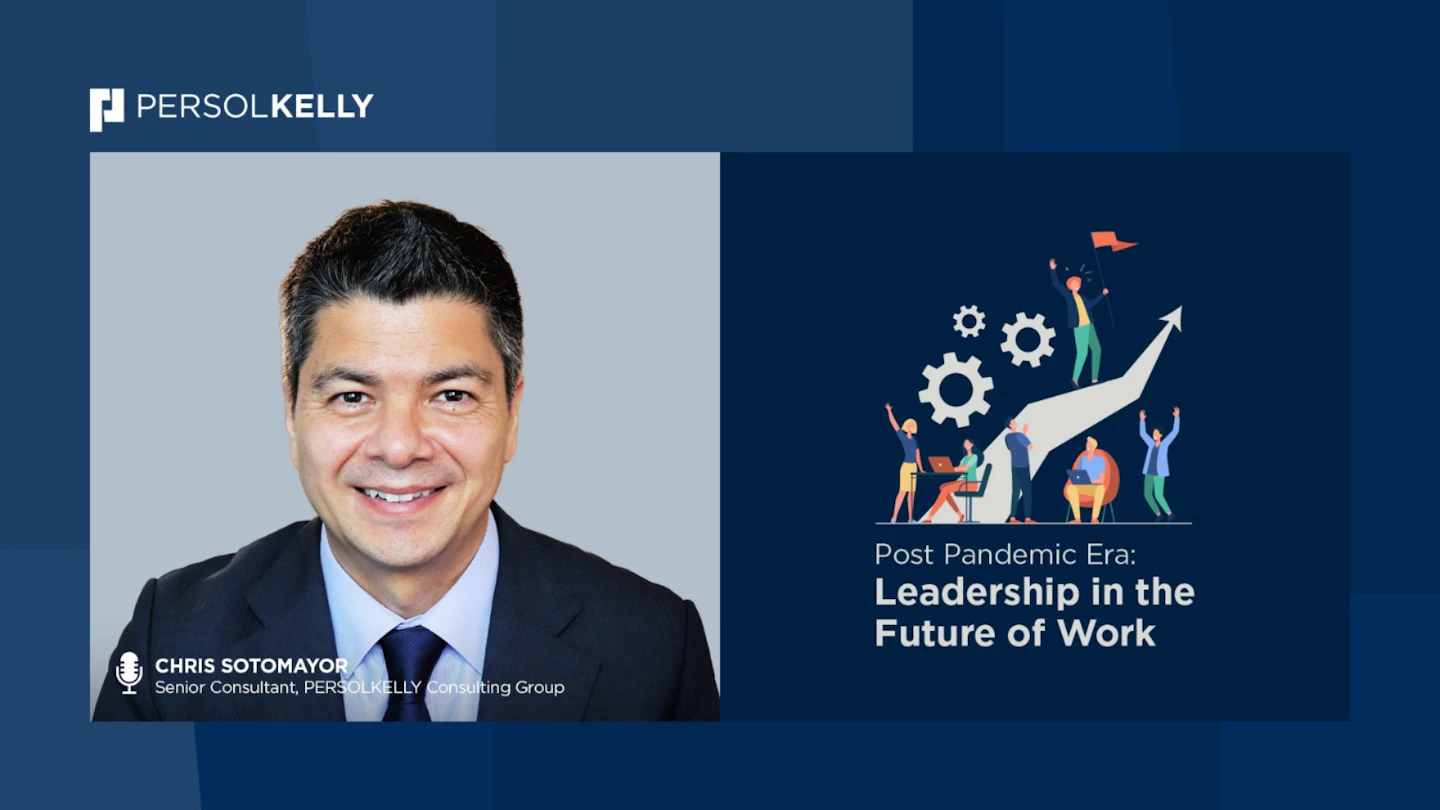
What Are the Core Principles of Leadership in the Digital Age?
Leadership in the digital age requires transitioning from conventional top-down command and control to human-centric, data-informed stewardship. Modern leaders must focus on four strategic imperatives: building compelling employer value propositions to win specialized talent, cultivating psychological safety to maximize retention, implementing continuous skill development pathways, and establishing agile operational rhythms that empower distributed teams to deliver measurable business outcomes.
In this executive panel session, Chris Sotomayor and Alvin Leung examine the fundamental leadership shifts redefining enterprise organizations across Asia-Pacific. As digital transformation accelerates, corporate leaders face unprecedented talent complexities: evolving employee expectations, rapid technology obsolescence, and the operational friction of managing hybrid workforces.
Below are the key strategic takeaways and actionable management frameworks discussed during the talkshow.
1. Mastering Candidate Attraction in a Competitive Market
Attracting top-tier talent in the digital era requires more than competitive compensation benchmarks. Modern candidates prioritize organizational purpose, technological agility, and genuine cultural alignment:
- Authentic Employer Value Proposition (EVP): Clearly articulate what differentiates your organization's mission, values, and work culture.
- Streamlined Candidate Experience: Lengthy, opaque recruitment cycles drive top performers to competitors. Modern talent acquisition demands rapid, transparent communication.
- Flexible Work Policies as a Strategic Asset: Demonstrating trust through flexible and hybrid work arrangements has transitioned from a temporary accommodation to a baseline hiring prerequisite.
2. Safeguarding Talent Retention Through Psychological Safety
Retaining high-performing professionals requires proactive engagement systems that address burnout and disengagement before attrition occurs:
- Cultivating Psychological Safety: High-performing teams thrive when employees feel safe to voice concerns, experiment, and take calculated risks without fear of retribution.
- Transparent Executive Communication: Maintaining radical transparency around corporate objectives, organizational pivots, and performance expectations anchors employee trust.
- Recognizing Impact Over Attendance: Shifting evaluation metrics strictly from physical desk hours to milestone-driven output builds mutual respect and accountability.
3. The Strategic Imperative of Continuous Talent Development
Skills decay at an accelerating pace in the digital economy. Organizations that fail to invest in continuous upskilling risk structural capability obsolescence:
- Dynamic Reskilling Pathways: Create structured internal learning academies focused on emerging technologies, data analytics, and digital literacy.
- Internal Talent Mobility: Provide cross-functional project assignments that allow top performers to expand capabilities within the business rather than seeking external career jumps.
- Empathetic Leadership Coaching: Equip frontline managers with coaching skills to guide individual career trajectories and bridge personal growth with enterprise goals.
4. Adopting Agile Management for the Future Workplace
Effective modern leadership blends technological enablement with human-centric stewardship:
- Decentralized Decision-Making: Establish clear operational guardrails and empower cross-functional teams to make decisions autonomously, accelerating speed-to-market.
- Outcome-Oriented Rhythms: Replace exhaustive status meetings with focused, asynchronous communication and lightweight weekly blocker-clearing syncs.
- Holistic Well-being Integration: Prioritize employee mental health and sustainable workloads to prevent executive and team-level burnout.
Psychological Safety in Practice
Psychological safety is the most quoted and least implemented leadership concept. In practice it is built from small, repeatable behaviours: leaders responding to bad news with curiosity instead of blame, crediting ideas to their originators publicly, and explicitly asking the quietest person in the room for their view before decisions close. In hierarchical business cultures across APAC, safety does not emerge by default - it must be modelled from the top, consistently, before juniors will risk honesty. Teams with genuine safety surface problems months earlier, which is precisely when they are still cheap to solve.
Employer Value Propositions That Work
A compelling EVP is specific or it is nothing. "Great culture and competitive salary" describes every employer; what differentiates is the honest answer to why strong people join, stay and grow here - the actual projects, the visible career pathways, the technology the team works with. Build the EVP from evidence gathered from current employees rather than aspiration, and let candidates talk to the people doing the work before they sign. Authenticity in the EVP is also a retention tool: people who joined for an accurate picture stay longer than people recruited by a brochure.
Continuous Development Pathways
Digital obsolescence is the quiet career risk of the modern era, and organisations that fund continuous learning retain the people most expensive to lose. Structured development pathways - with time, budget and visible progression attached - signal that the organisation is investing in the workforce's future, not just consuming it. The same pathways are the strongest rebuttal to competing offers: a star who can see their next two roles internally has less reason to look externally for growth.
Agile Rhythms That Actually Work
Agile management in practice is a set of rhythms rather than rituals. The panel's operational takeaways: replace exhaustive status meetings with asynchronous written updates plus one short weekly blocker-clearing sync; decentralise decisions inside explicit guardrails so speed does not become chaos; and treat wellbeing as a capacity input - sustainable workloads are what make agile pace sustainable. Teams that run these rhythms report faster decisions without the burnout tax that hybrid transformation often carries.
Digital Skills for the Leadership Team Itself
Leaders cannot guide digital transformation from a strategy deck. The panellists' own development priorities: data literacy for evidence-based decisions, fluency with the collaboration stack their teams use daily, and enough technical vocabulary to hire and evaluate specialists credibly. Leaders who upskill alongside their teams dismantle the silos that digital initiatives usually die in - and signal that learning flows upward as well as downward.
Applying the Playbook Across APAC Markets
The leadership shifts play out differently across the region's markets: mature hubs compete on employer brand and development investment, high-growth markets on speed and opportunity, and family-influenced business cultures on trust and personal credibility. The unifying principle from the panel: meet each market's expectations deliberately rather than exporting one playbook everywhere - and let the EVP evidence come from the local employees themselves.
Accelerate Your Leadership and Talent Strategy with PERSOL
Navigating digital transformation and workforce restructuring requires experienced leadership and agile talent solutions. Partner with PERSOL across Asia-Pacific to identify executive leaders, build high-performing teams, and optimize workforce capabilities. Explore PERSOL Workforce Solutions, Request Specialized Talent, or Contact Our Team today.
Related Articles


Malaysia Doesn't Have a Talent Shortage. It H...
Explore Malaysia's talent access problem, revealing hidden markets an...


How Malaysians Accidentally Undervalue Themse...
Think you’re underpaid? Learn the signs, causes, and how Malaysians c...


Quitting Without Burning Bridges: How Malaysi...
How Malaysians resign professionally in 2026 without burning bridges ...


Successful Recruitment Partnerships: Building...
Learn how strong recruiter relationships and great candidate experien...