How the Metaverse Transforms HR & Recruitment
Authored by PERSOL Editorial Team, Content & Editorial Team, APAC • 6 min read


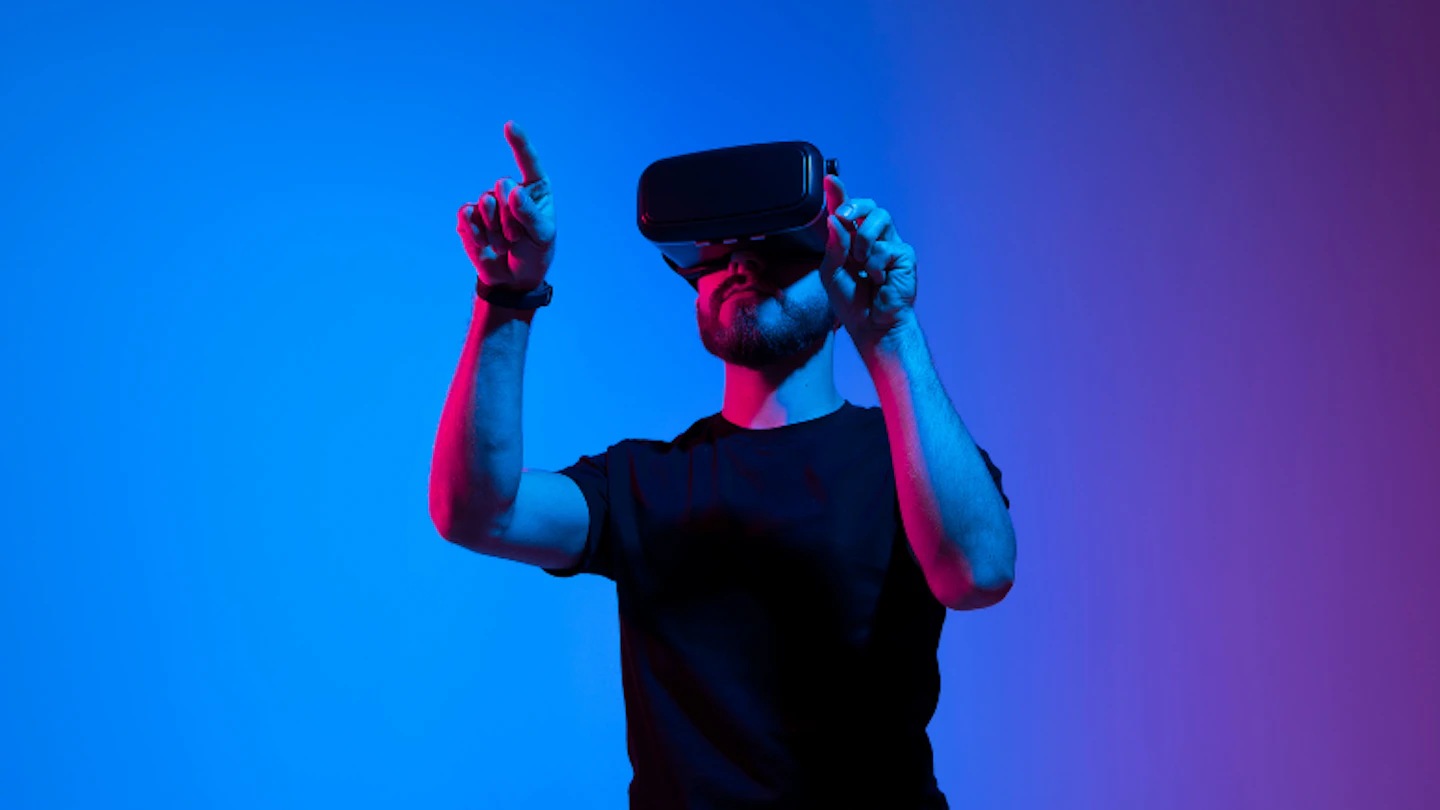
How Will the Metaverse Transform Human Resources and Talent Acquisition?
The metaverse transforms human resources by enabling immersive virtual onboarding, borderless spatial recruiting simulations, interactive 3D technical training, and dynamic digital headquarters. Organizations adopting virtual collaboration environments improve remote employee engagement, reduce onboarding cycle times, and access global talent pools without geographic friction.
It is safe to say that the concept of the ‘metaverse’ went mainstream in 2021 when Facebook announced that it would rebrand its parent company as Meta to underline its new focus on the immersive world of the metaverse. But what exactly is the metaverse and what applications are there in the HR space?
Taking Social Experiences Into a New Dimension
For HR leaders, the metaverse is best understood as the next interface for the workplace internet—less about headsets and more about presence: the ability for distributed teams to meet, train and collaborate in shared digital spaces that approximate being in the same room. The sections below cover what that means for remote work, recruitment and learning, and what is realistic today.
The metaverse is essentially a more interactive version of today’s social networks. Through technology such as XR (extended reality), AI (artificial intelligence) and blockchain, users are able to interact with each other in a virtual world through 3D avatars. Devices like virtual reality headsets can augment the experience, but are not a critical tool to take part in the metaverse.
What is transformational about the metaverse is that it forms part of the development to create a new world wide web – Web 3.0. This new version of the internet is expected to be decentralised, meaning that all data and contents on it are no longer controlled by tech giants such as Apple, Google, Microsoft and Amazon. So while many companies like Meta and Disney are currently turning their attention to the metaverse, they ultimately won’t get to control this new network.
Increased Productivity for the Remote Workforce
Remote and hybrid work across APAC is now standard for knowledge industries, but the friction points are familiar: meetings that feel flat, onboarding that feels lonely, and collaboration that depends on being in the same city. Immersive platforms attack exactly those friction points.
Eventually, we will be able to conduct these activities in the metaverse: work meetings, catching up with friends, shopping and attending live performances. It is expected to have a profound impact on the way brands interact and engage with their customers.
The metaverse will also allow companies to manage a remote workforce more effectively - for instance, by enabling more seamless communications that will closely replicate the face-to-face experience and encourage collaboration. Facebook is currently testing a remote work app named Horizon Workrooms, through which people can interact with each other using the Oculus headsets. For distributed teams across APAC’s time zones, the promise is cultural as much as technical: shared virtual spaces give remote colleagues a place to bump into each other informally, which is exactly the serendipity hybrid work struggles to recreate.
This new way of work allows the remote workforce to be as productive as office-based staff. This in turn means that companies will no longer be restricted to their local area to find new talent and could potentially recruit candidates from all around the world (or at least in the same time zone).
The Reality Check: From 2021 Hype to Practical Adoption
Before investing, ask four questions. Which specific problem—onboarding, training, collaboration—does this use case measurably improve? Do our candidates and employees have the hardware and bandwidth to participate, or does the pilot quietly exclude people? Is the experience accessible across the markets we hire in? And how will we measure whether the immersive version outperforms what it replaces? Pilots with clear answers scale; pilots without them become expensive demonstrations.
Honesty makes this article more useful, not less: the metaverse conversation has cooled since the rebranding wave, and that is healthy. What survived the hype cycle is the underlying capability—immersive technology in the workplace. Virtual reality training is now a proven L&D tool for safety, compliance and high-stakes simulations; virtual office platforms have matured past the novelty stage; and the convergence with AI has made virtual assistants and spatial tools genuinely useful. The metaverse as a single unified virtual world remains a work in progress—but the technologies behind it are already delivering value in specific, measurable HR use cases.
Practical Use Cases Available Today
Immersive technology is already earning its place in specific HR workflows. Virtual job fairs and immersive office tours let candidates experience a workplace before applying—valuable for global roles where travel is impractical. VR-based skills assessments and simulations evaluate how candidates behave in realistic scenarios rather than how they describe behaving. Onboarding cohorts can meet each other and their teams in virtual spaces before day one. And in L&D, immersive safety, compliance and equipment training consistently outperforms slide-based learning on retention, because people remember what they practised.
Recruitment experience and L&D also stand to benefit
It is also easy to see how the metaverse can be leveraged for the recruitment process. Not only can it be used in the interview process, but it also could allow candidates to learn more about working at the company and its culture through a virtual world, not to mention onboarding when a candidate is eventually hired. Virtual assessments add another layer: scenario-based exercises in immersive environments reveal collaboration and problem-solving behaviour that a video call cannot surface. The metaverse also promises to revolutionise learning and development, with staff able to take part in fully immersive remote training sessions in virtual rooms.
While we are only scratching the surface of the potential HR applications, it is important to realise the technology is maturing in stages: immersive training and virtual collaboration are practical today, while fully realised persistent virtual workplaces remain further out. Organisations do not need to bet on one platform—they need to pilot the use cases that pay for themselves: onboarding simulations, virtual career fairs, immersive safety training and remote collaboration rituals. Each pilot builds the institutional familiarity that makes the next adoption easier.
Regardless of what happens over the coming years, PERSOL keeps its finger on the pulse of emerging workplace technology and its real impact on talent strategy. We offer borderless customised solutions that leverage our capabilities as a regional specialist in end-to-end HR solutions.
Transform Your Workforce Strategy with PERSOL
Embracing emerging digital workplace tools empowers organizations to create connected, highly engaged remote teams. Navigating emerging workplace technologies requires agile talent acquisition and strategic workforce advisory. Partner with PERSOL to access top technology specialists, implement future-ready hiring models, and drive organizational transformation across APAC.
Related Articles


Why Good Candidates Drop Out Halfway Through ...
A strong candidate applies, performs well in the first interview and ...


Malaysia Doesn't Have a Talent Shortage. It H...
Explore Malaysia's talent access problem, revealing hidden markets an...


How Malaysians Accidentally Undervalue Themse...
Think you’re underpaid? Learn the signs, causes, and how Malaysians c...


Quitting Without Burning Bridges: How Malaysi...
How Malaysians resign professionally in 2026 without burning bridges ...